Sayeh
Twelve artworks for one year, built live by the page and moved by the wind.
- Owner
- My own art project
- Role
- The art, the tool and the site
- Year
- 2026
- Status
- Seven of twelve made
- Built with
- A custom-made visual editor and Claude Code
- Sound design
- Emza
The site
The wall, then the artworks one by one, then one artwork filling the screen. Every frame is built in the browser as you watch.
The work
For about ten years I made pictures by hand in Photoshop: I kept part of a photograph by its tone, threw the rest away and stacked what was left, ten or fifteen deep, until there was more looking in the picture than one look could hold.
Sayeh turns that habit into a tool, because a habit with a number on it can be repeated and a habit in your hand cannot. I described how I work, and a machine wrote the tool from my description. Half of its rules were wrong the moment a real photograph went through, and the first version chewed pictures into static. It is a good tool because of the arguments.
With it I am making twelve artworks for one year, one word for each month, three to a season, so a season reads like a small poem. Bud, flower, shadow: spring. Each picture is named for its word, and the word is not written on it. It is taken out of it. In Persian the letters hold on to each other, so a word is a shape, and here the shape is a hole.
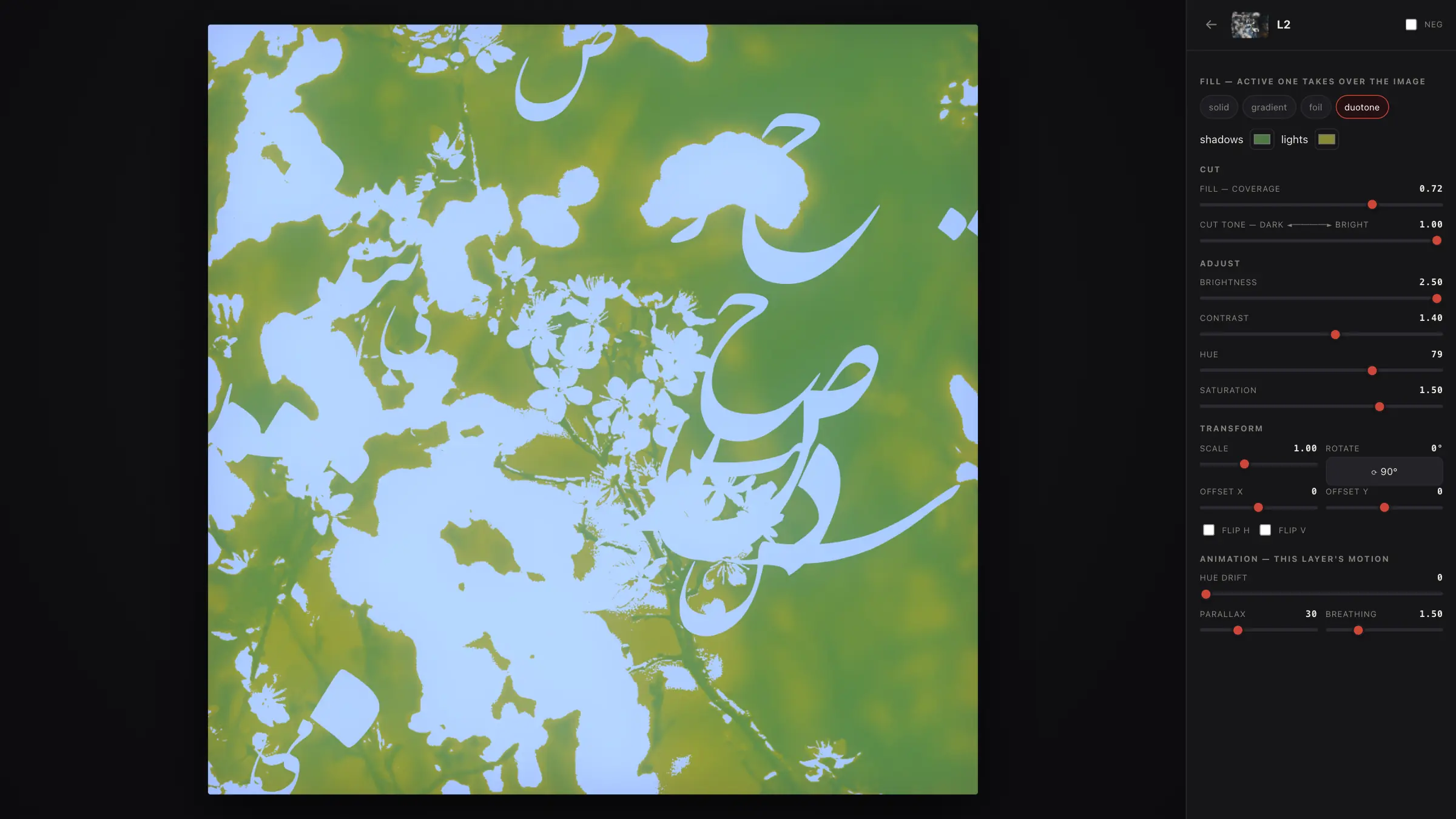
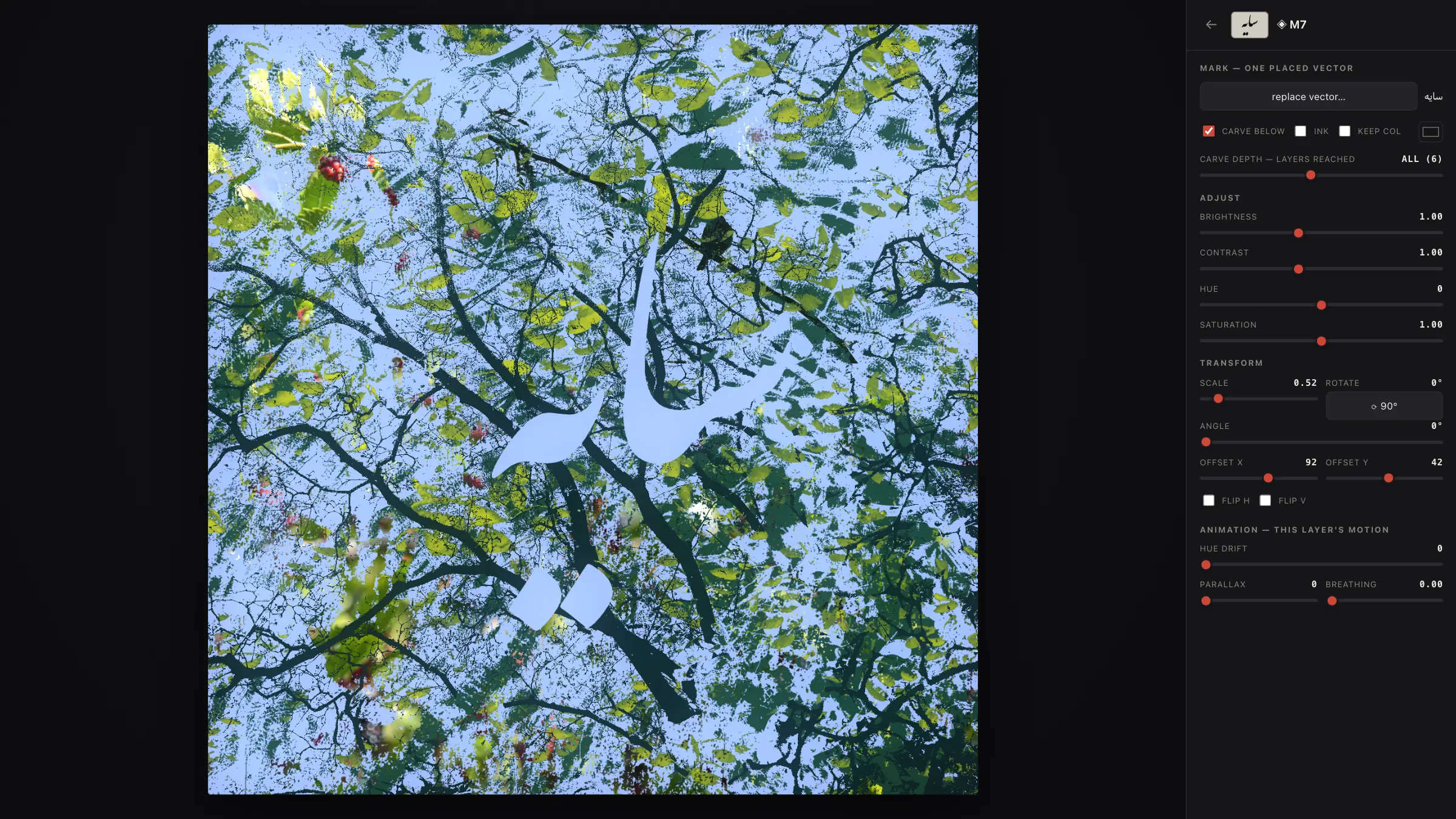
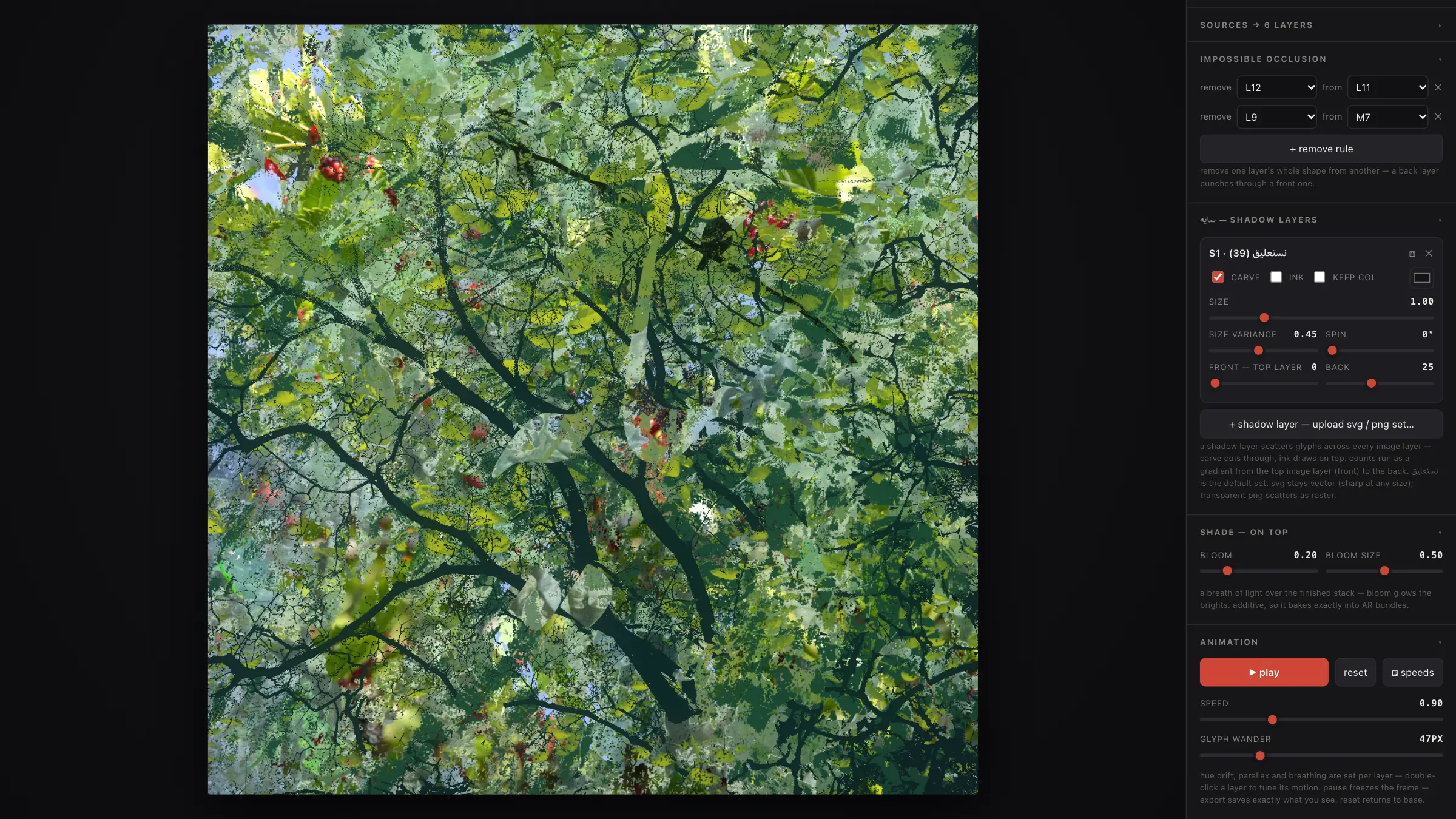
The tool is a visual editor: one web page, with no model behind it and no button that makes a picture. I build every piece in it by hand, one layer at a time. A layer keeps only the part of its photograph furthest from one tone, and exactly as much of it as I ask for: drop the darks and a tree turns to lace, drop the brights and it turns to a silhouette. I give each layer its colour, so photographs that were never near each other read as one palette, then its size, its angle and its place in the stack. A layer at the back can take its own shape out of one in front, so the depth never settles, and the word cuts down through as many layers as I tell it to. Every layer gets its own drift of colour, position and turn. Most of this was not in my first description. It is there because I was using the editor, something was missing, and I could add it.
Nothing on the site is a picture of the artwork. The page carries the same layers the tool works with and builds each piece live in the browser, with the tool’s own code. Each piece belongs to a city and moves at the speed of the wind blowing there right now. On a calm night, the one called Shadow almost stops.
The sound is an engine written for the page and played live, not a track. Tar and santoor are modelled in code, a tombak answers them, and water, birds, wordless voices and a dust of high notes drift in, near or far. Only the swallows are recorded. Each season has its own Persian mode, glad in spring and sadder in the cold months, every artwork has its own mix of what plays and how often, and the wind that moves a picture moves its sound too. The aim is sound as alive as the pictures, never the same twice. The first screen asks: with sound or in silence.
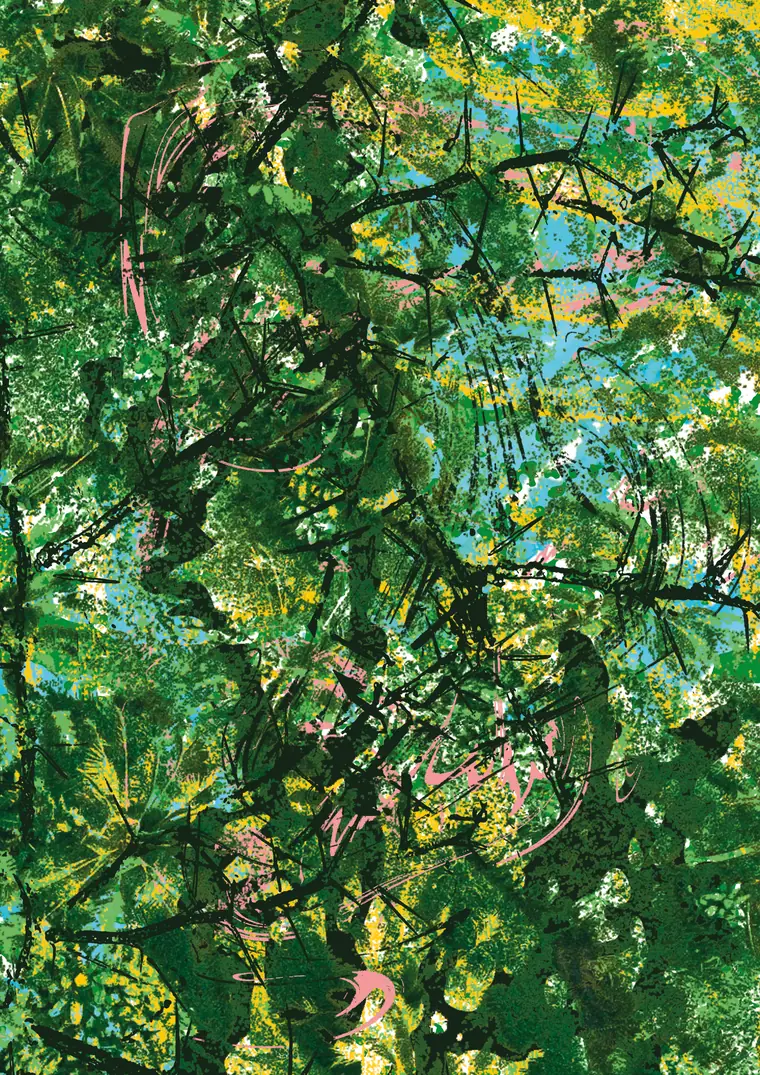
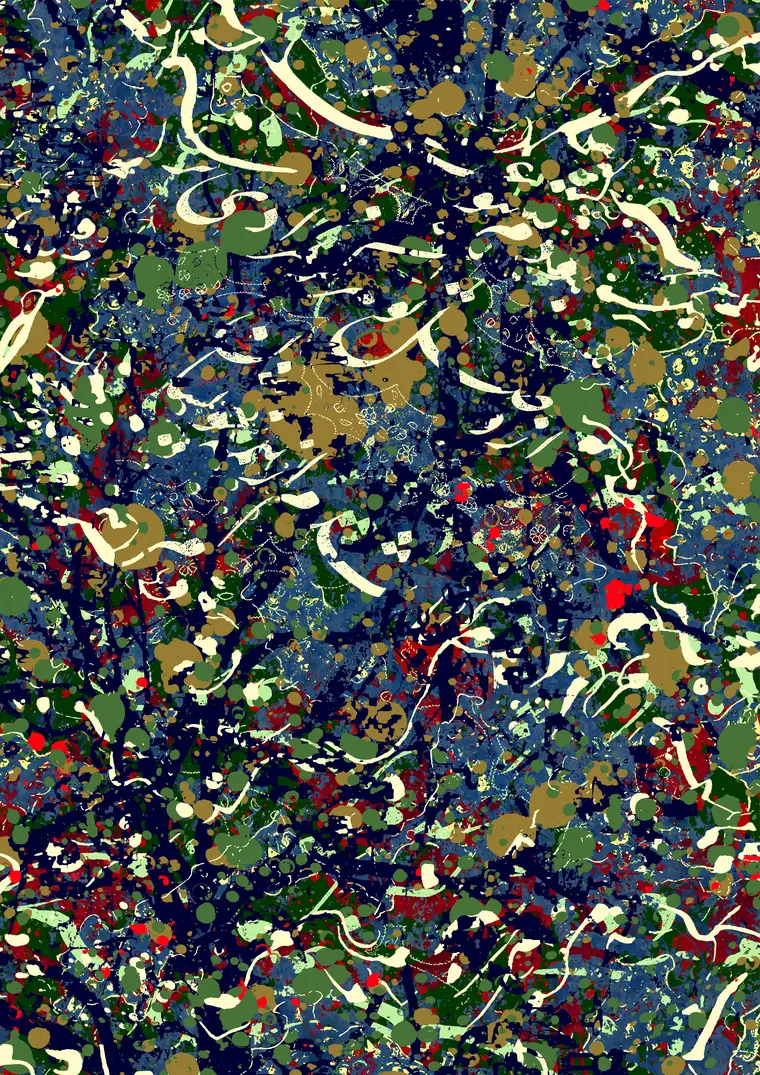
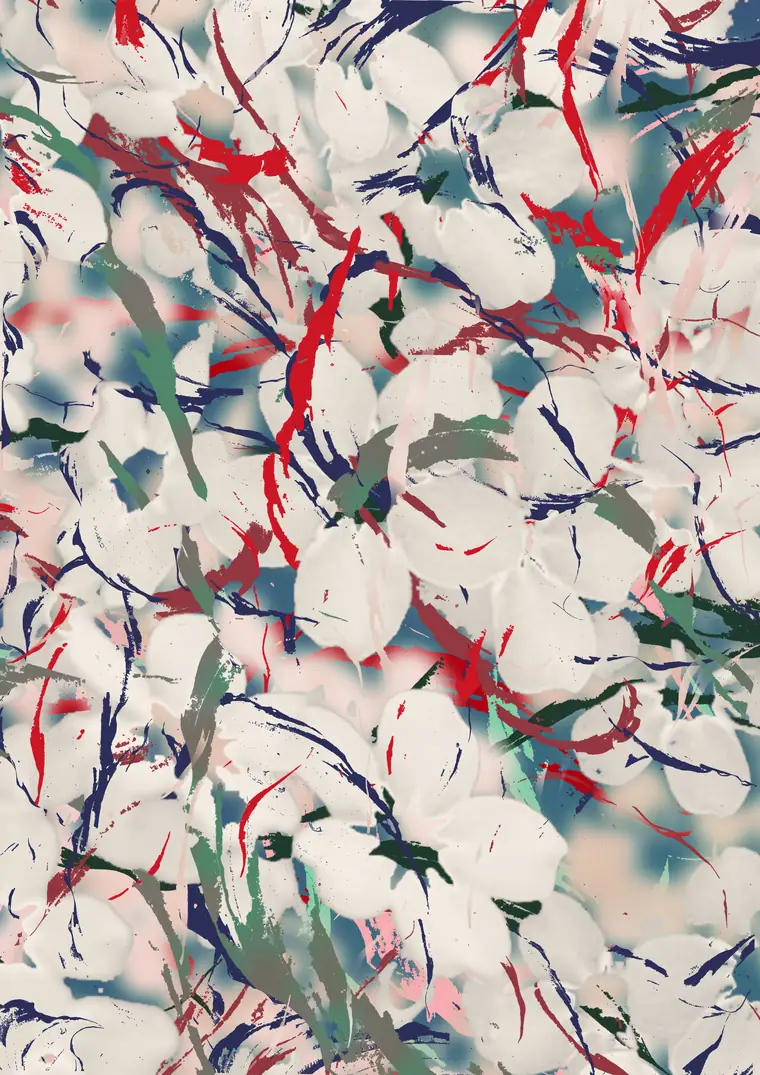
By hand, before Sayeh
Three of the pictures I made by hand in Photoshop in 2024 and 2025, every layer cut and placed by mouse, each file between 300 MB and 1.6 GB. The editor was written from these.
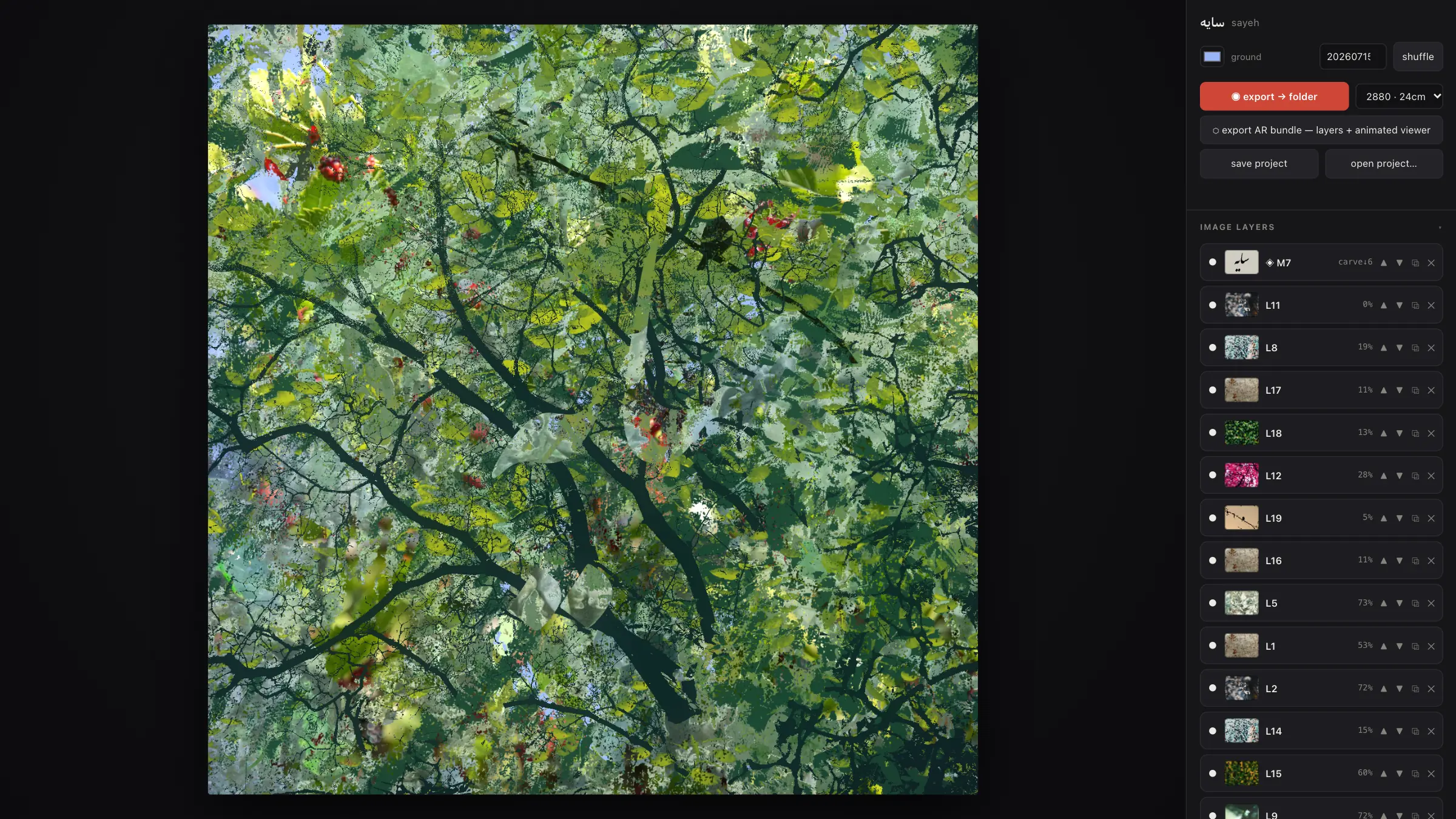
The editor
The editor I built for Sayeh, with one finished piece open. Every piece is made in it by hand, layer by layer.
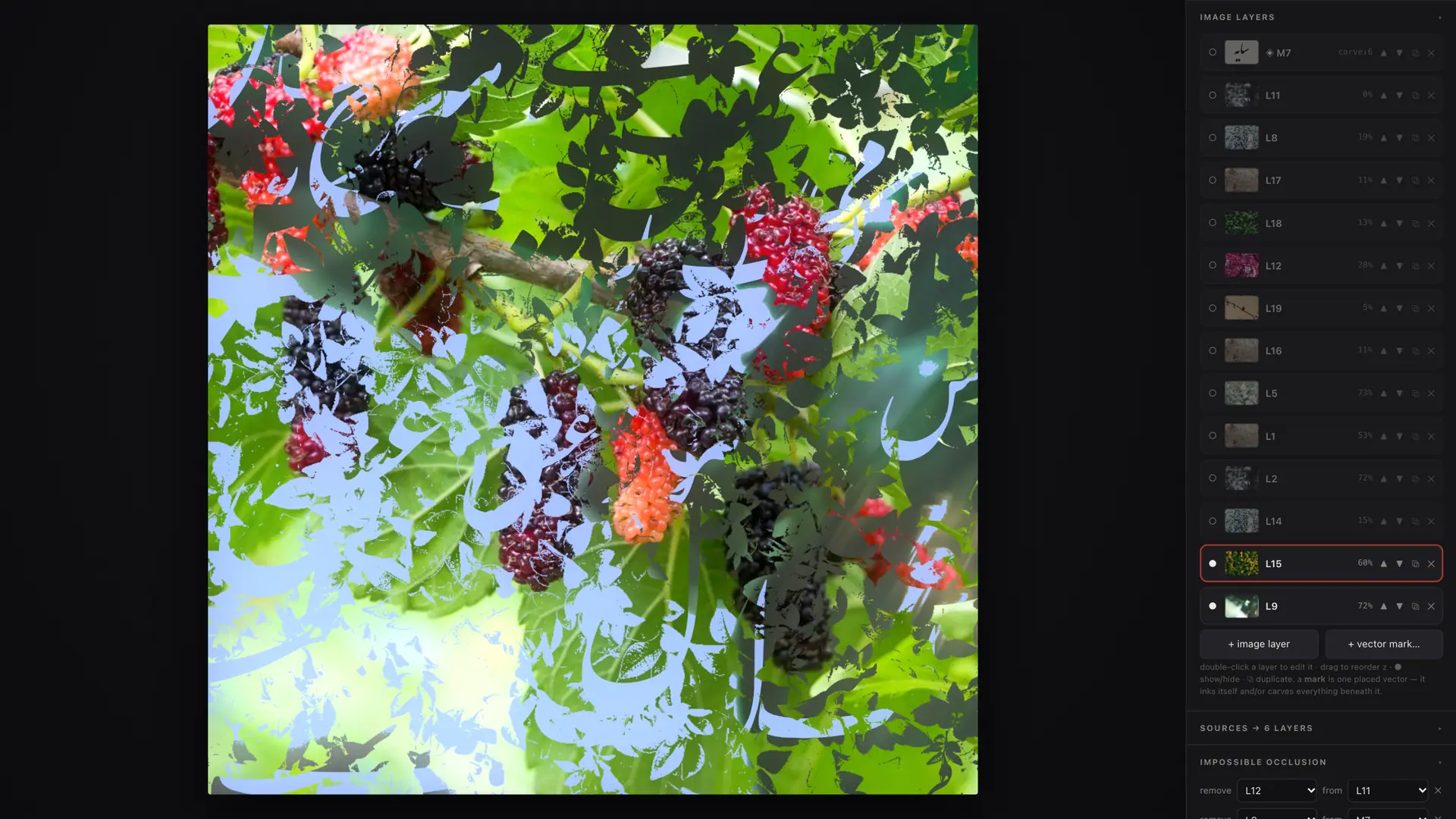
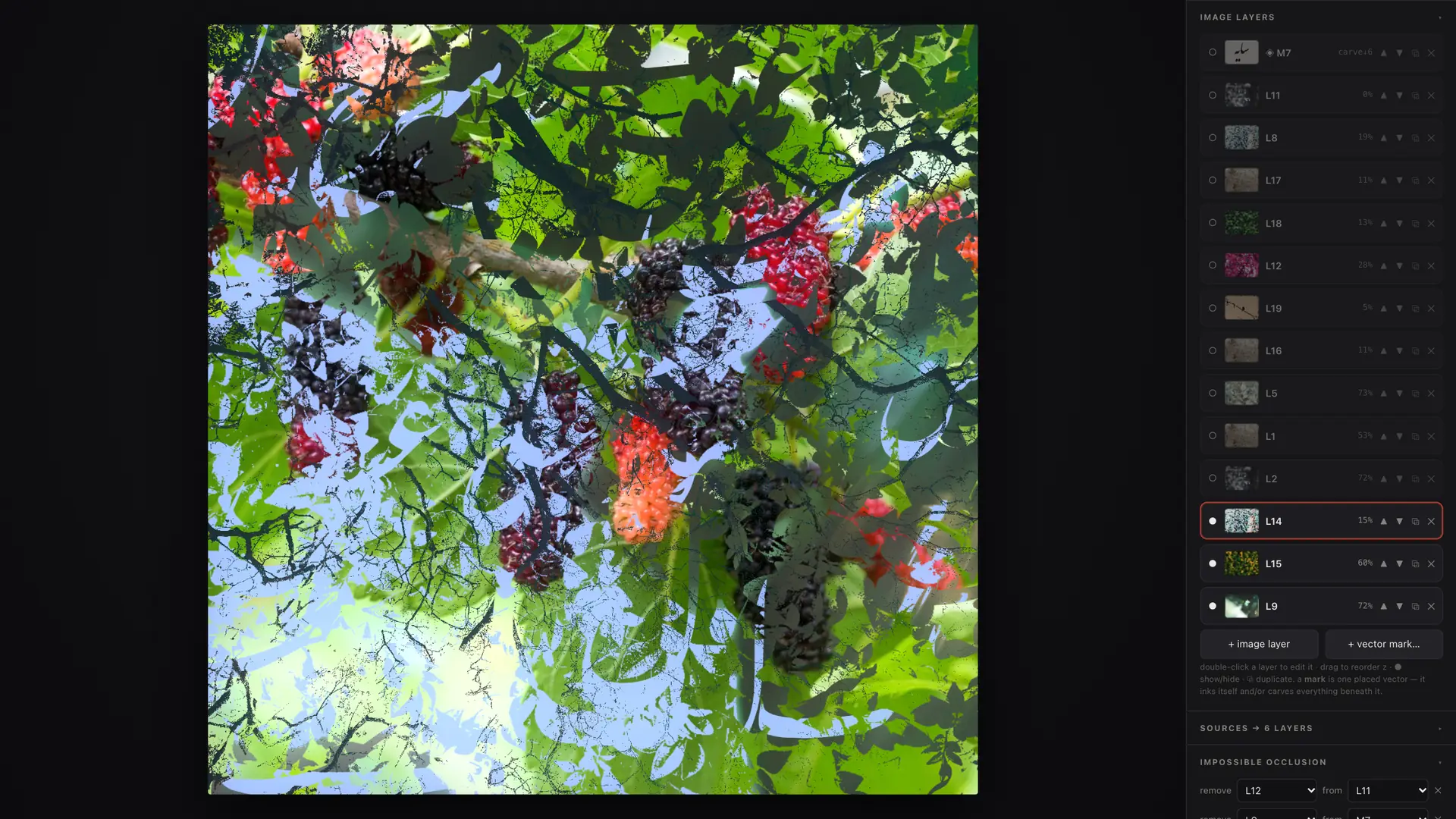
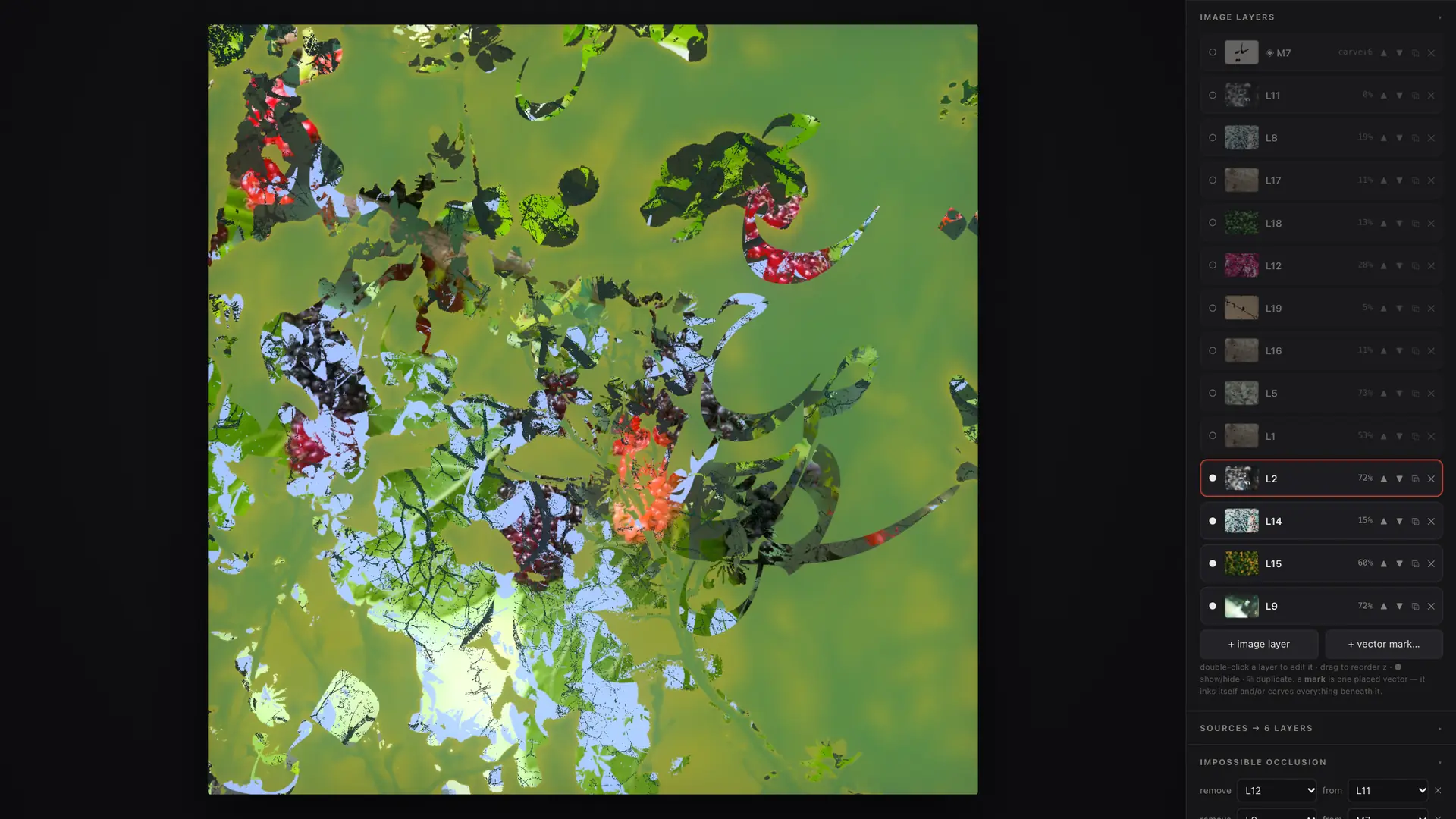
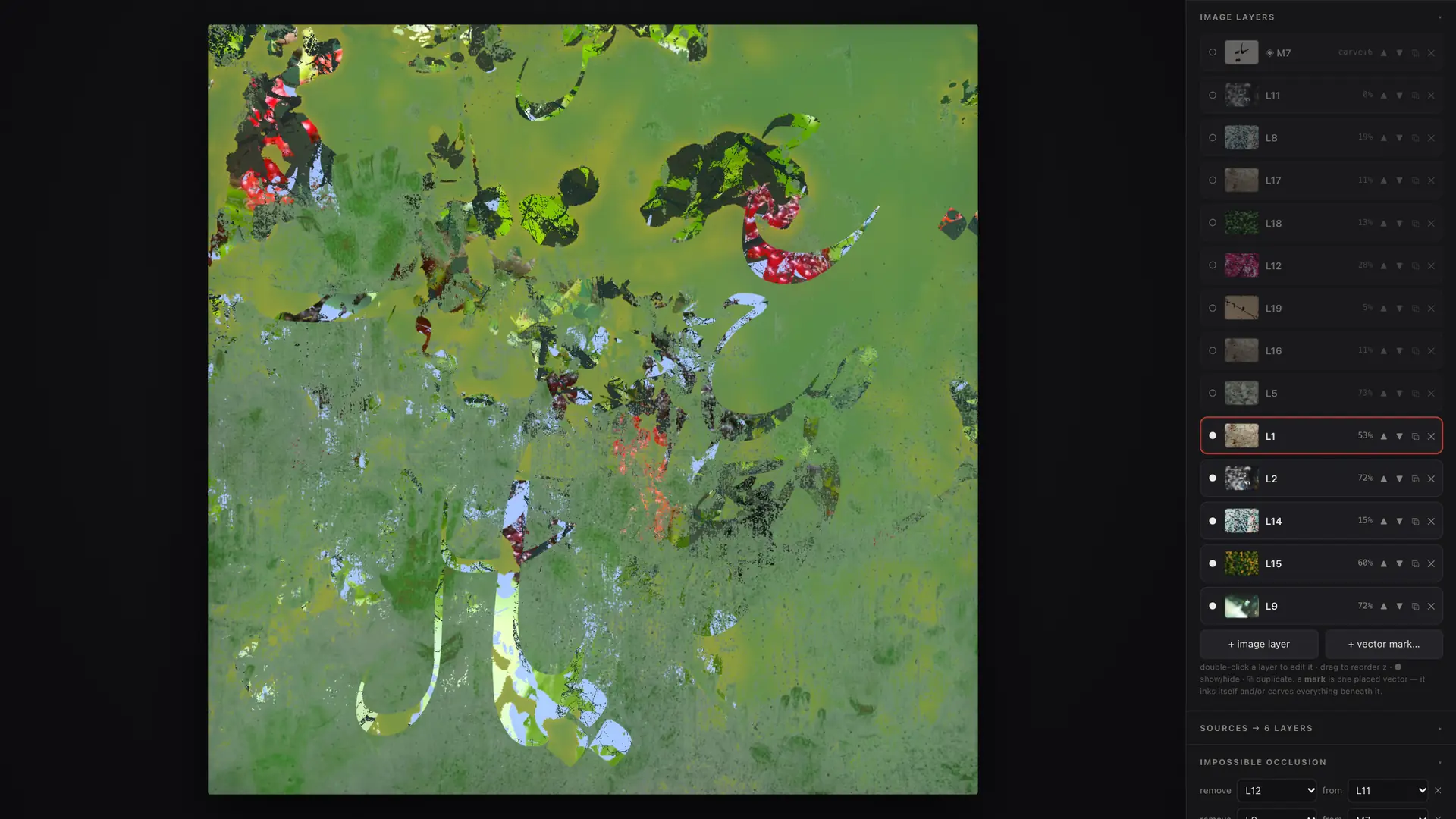
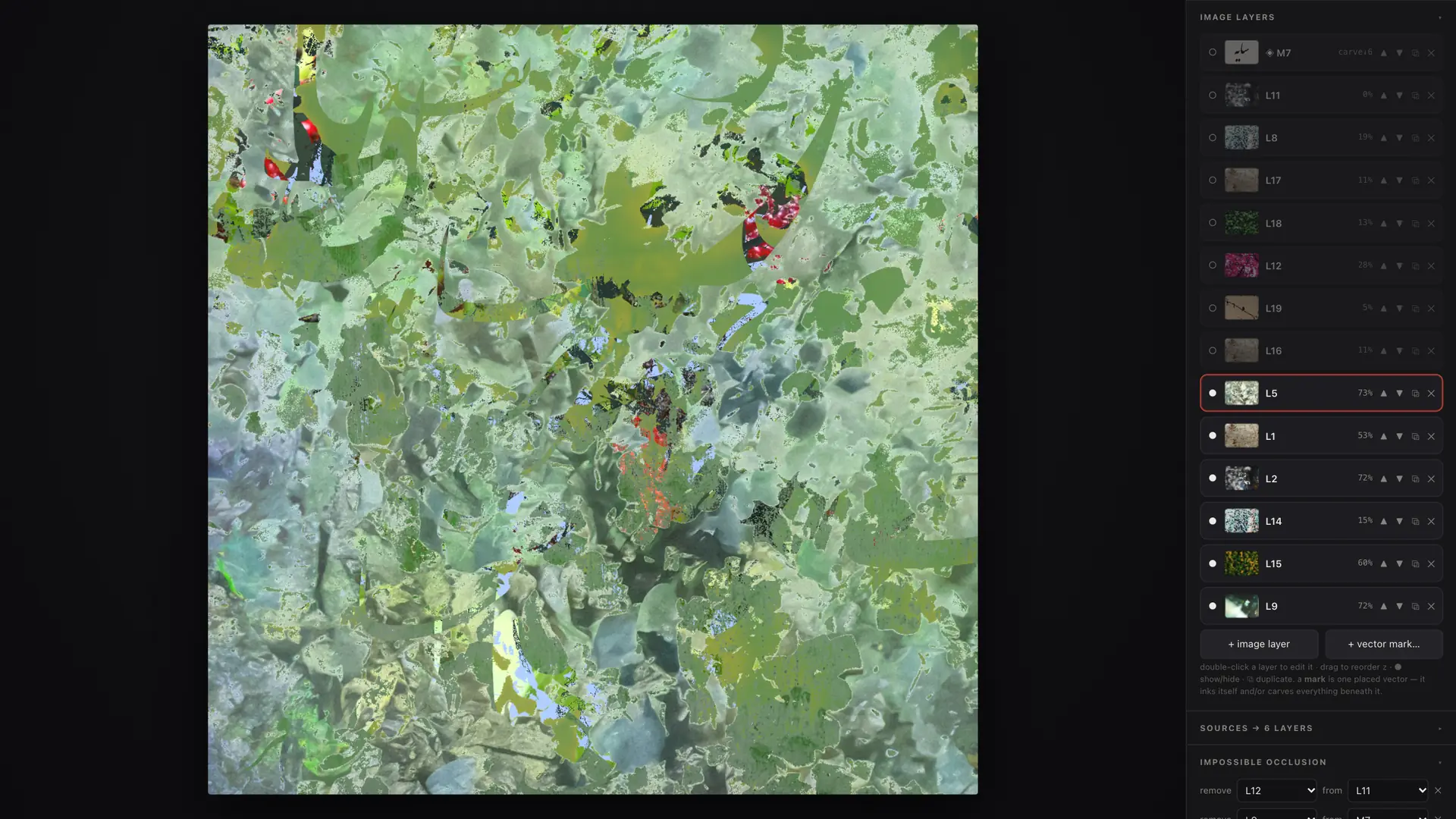
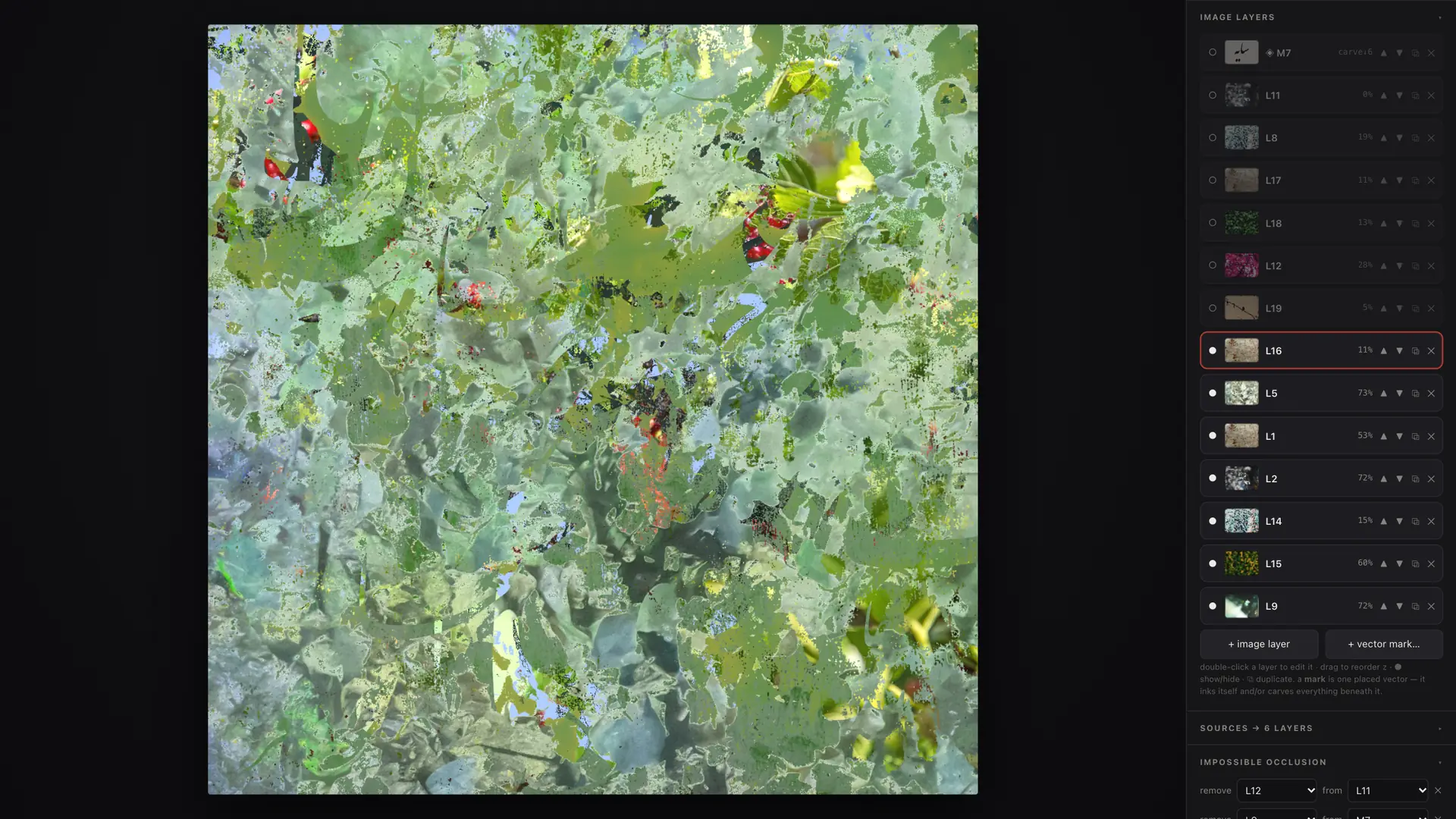
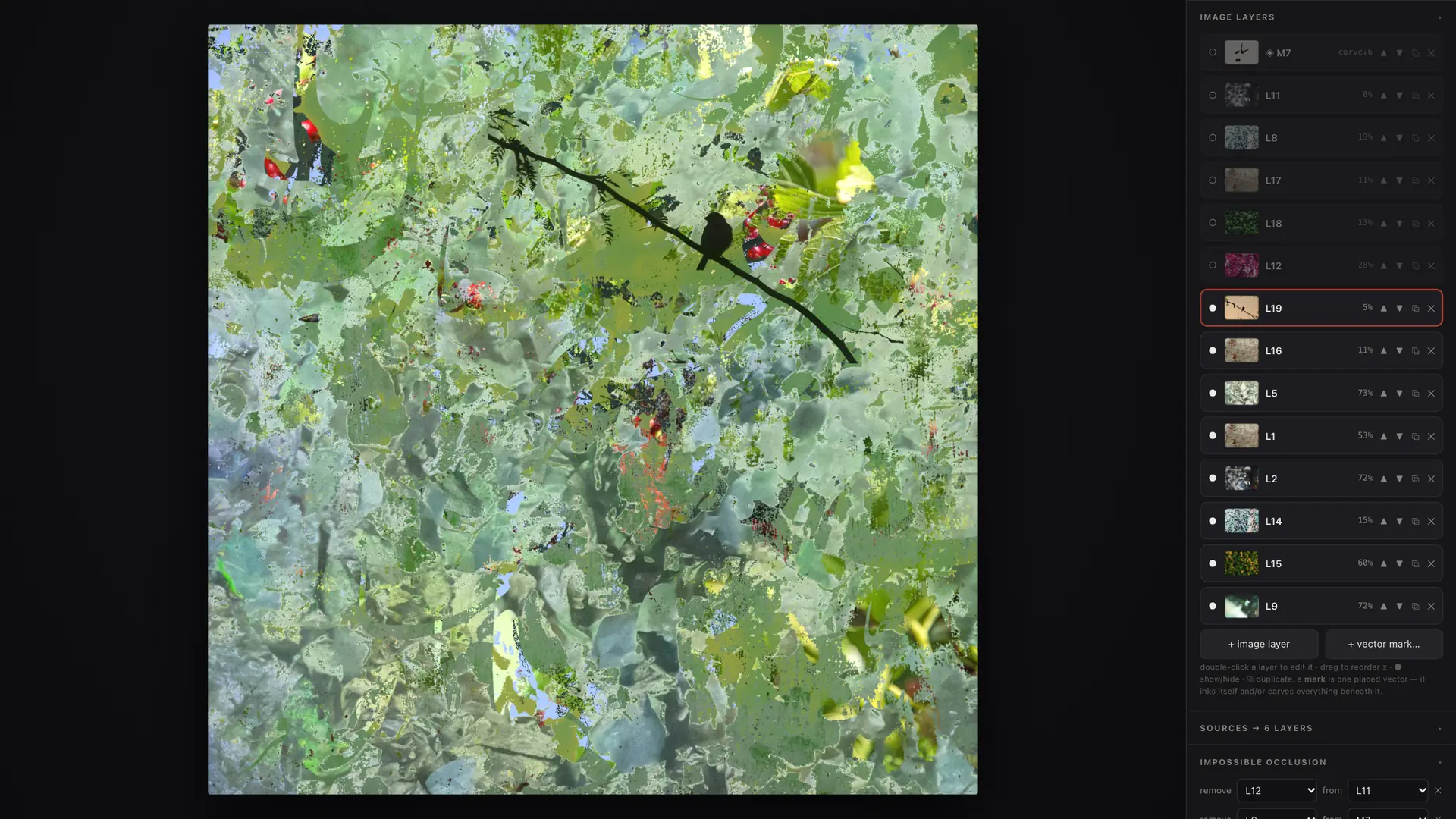
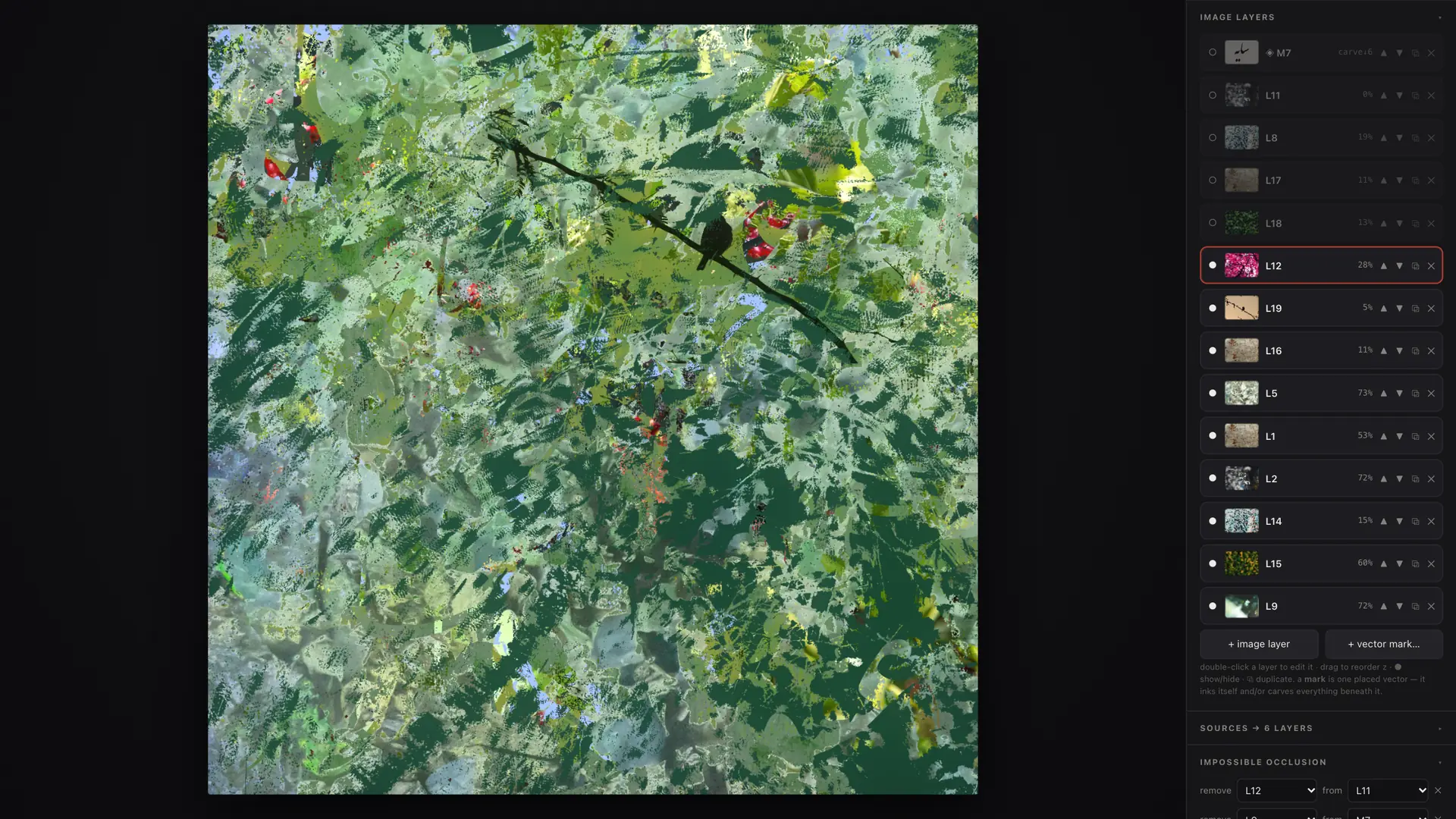
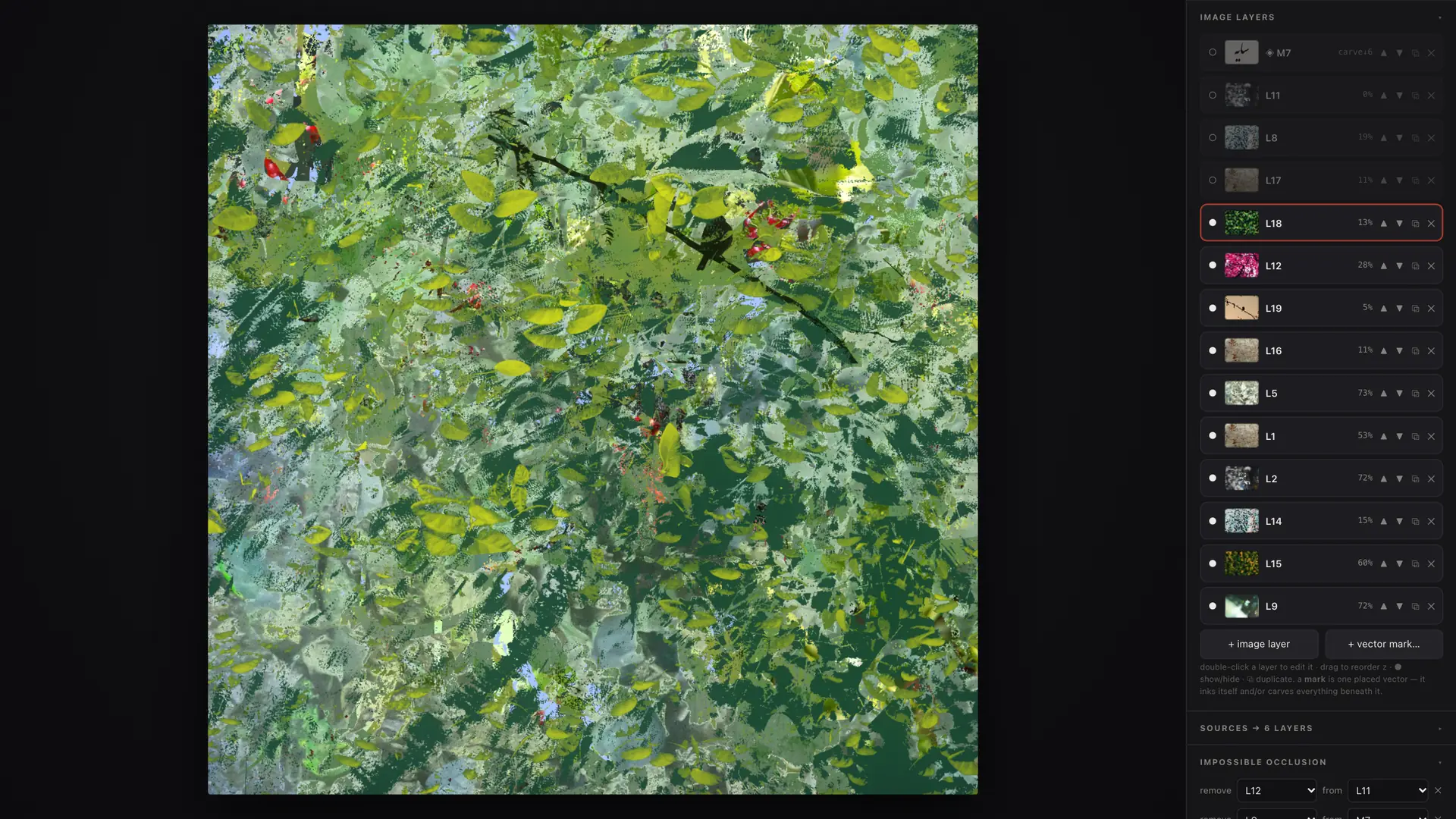
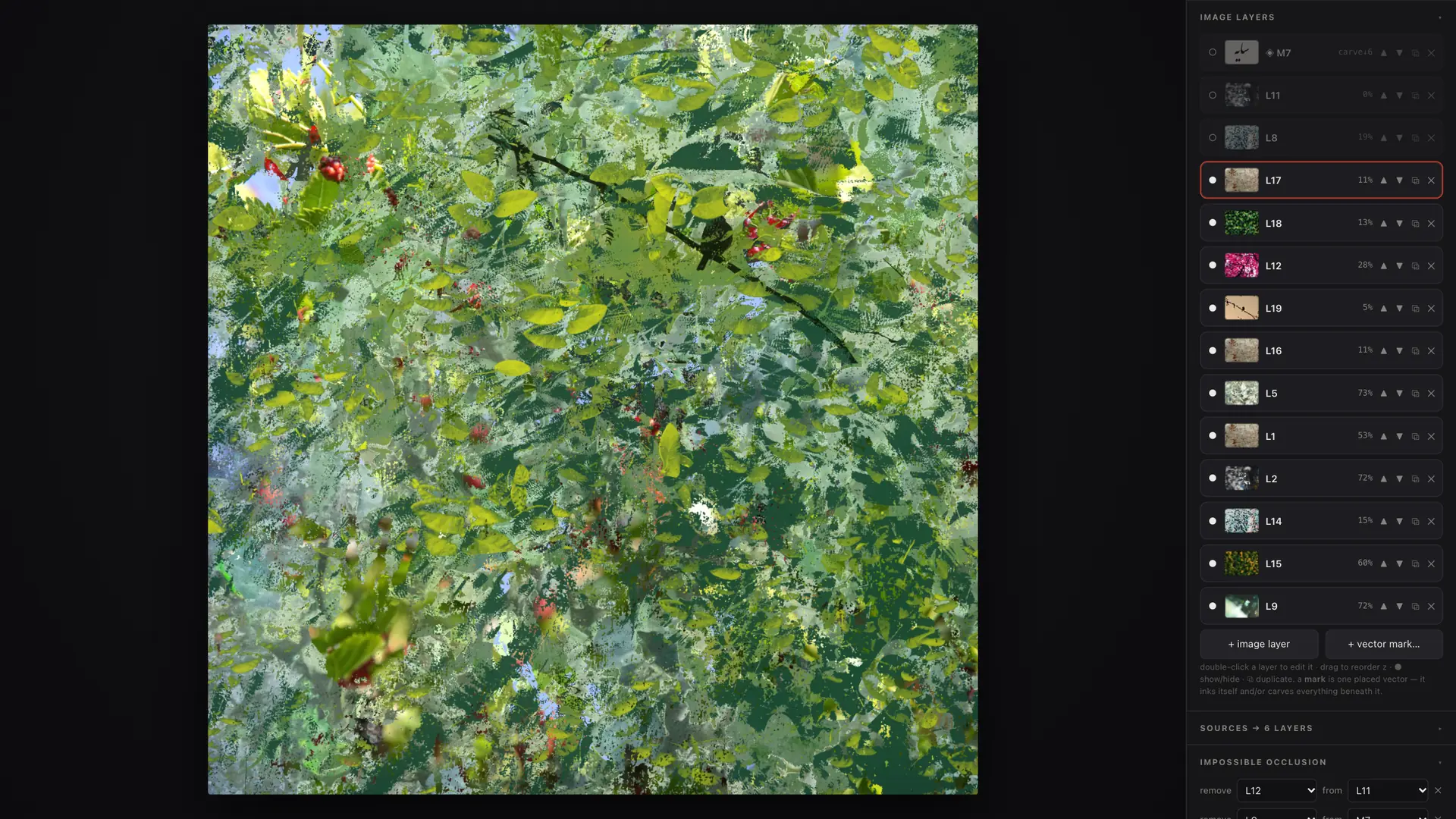
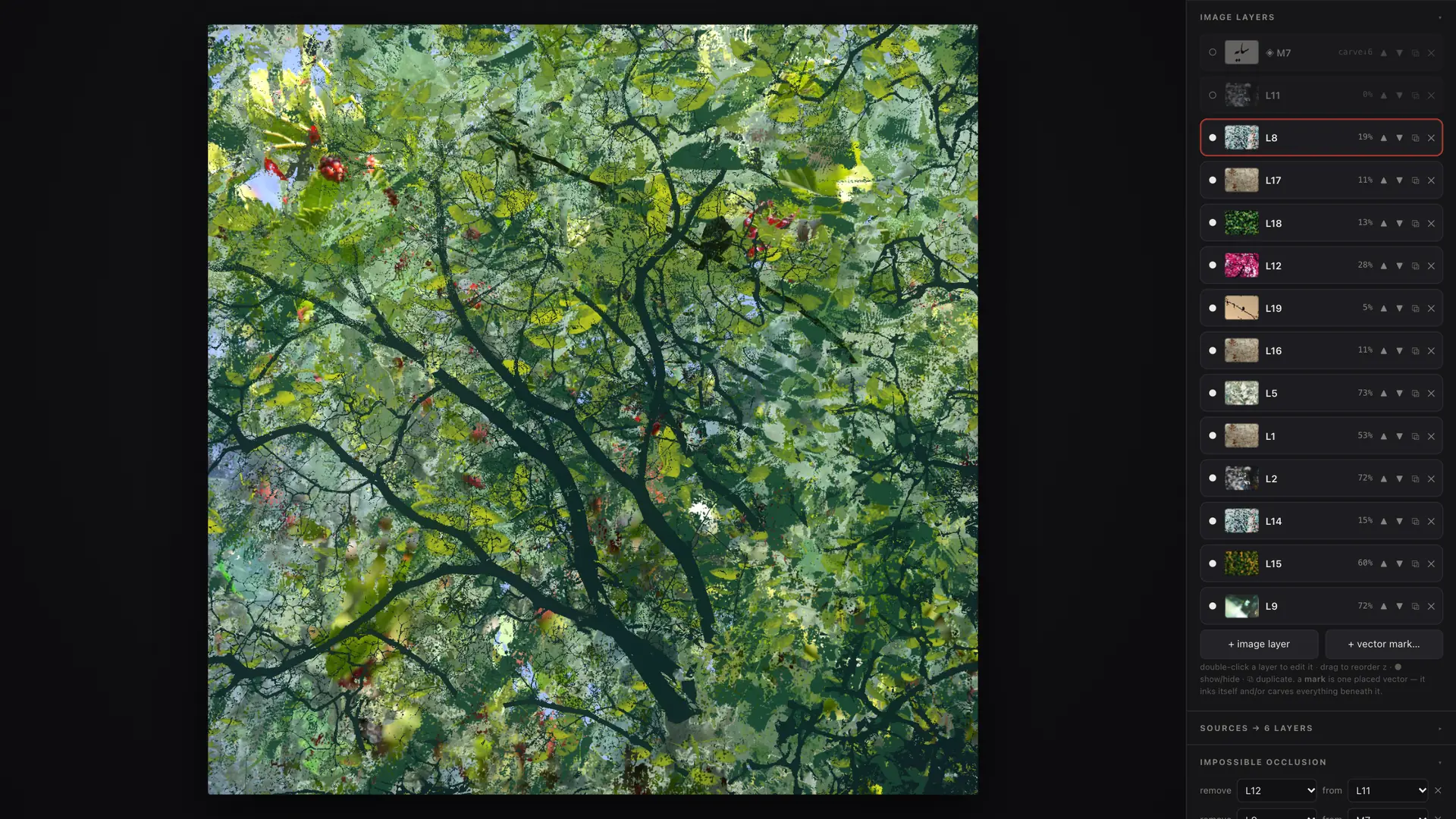
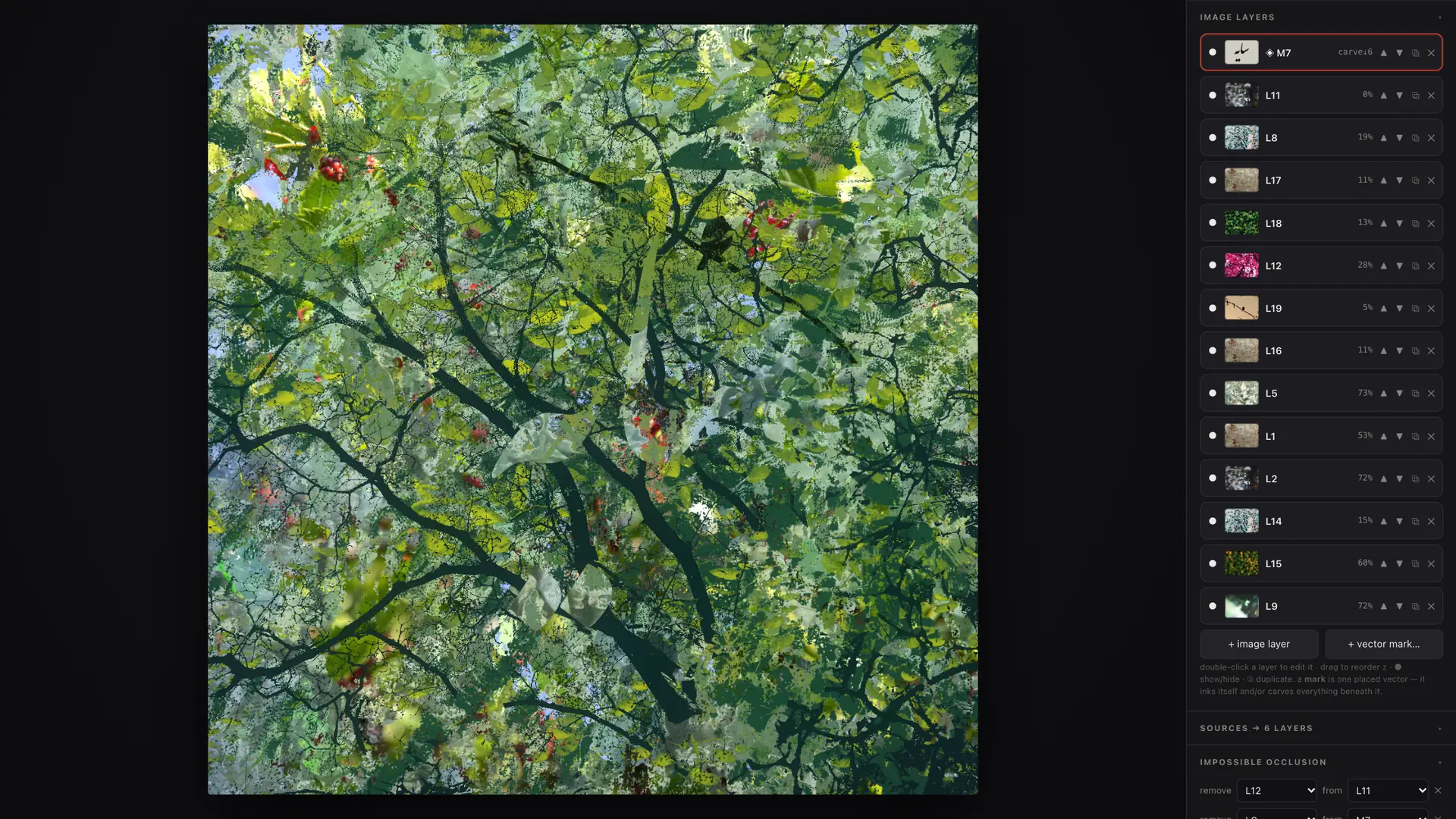
Layer by layer
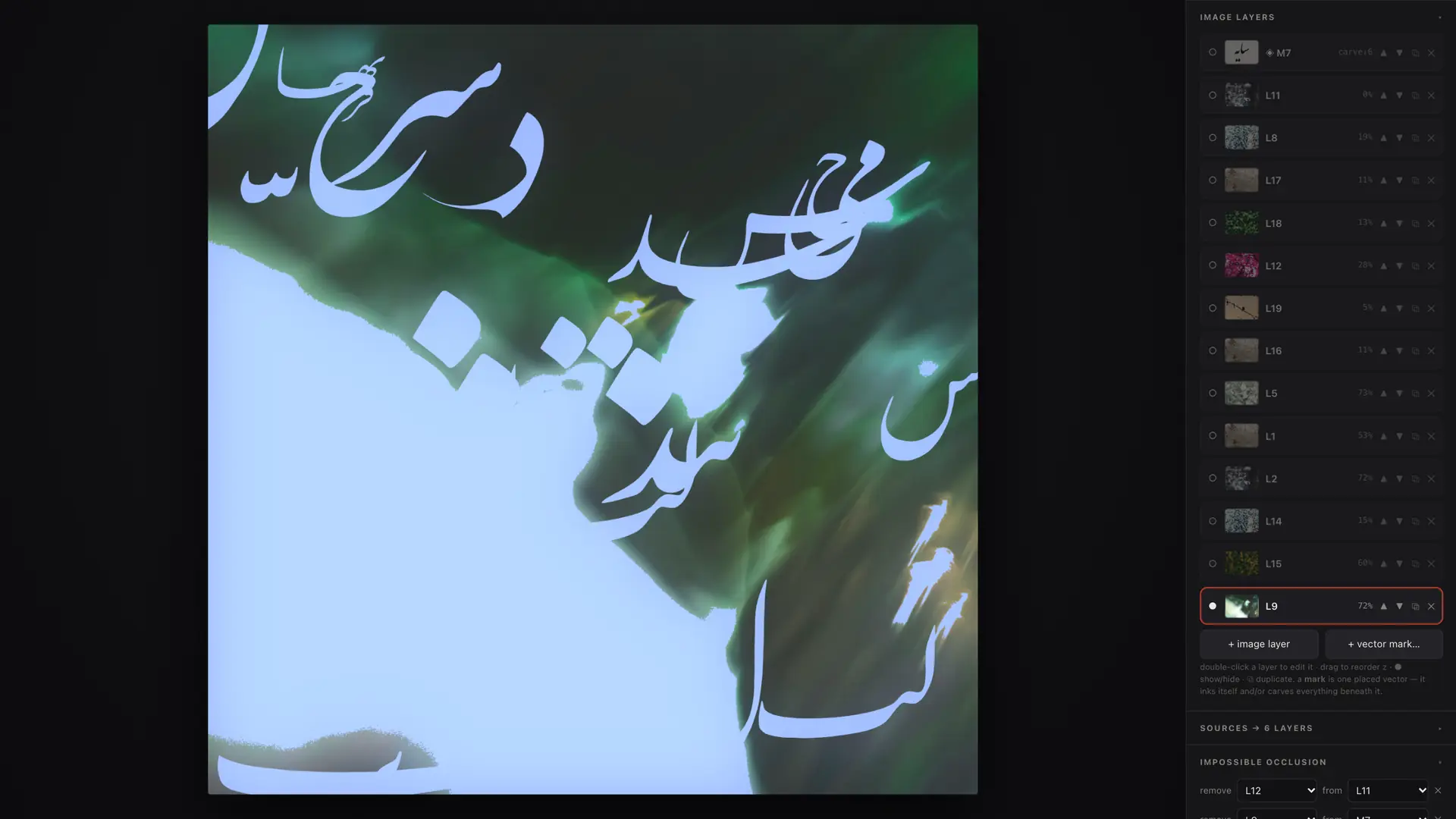
Sayeh built up in the editor from the back, one layer at a time, until the word goes on top. The newest layer is outlined in the list on the right.
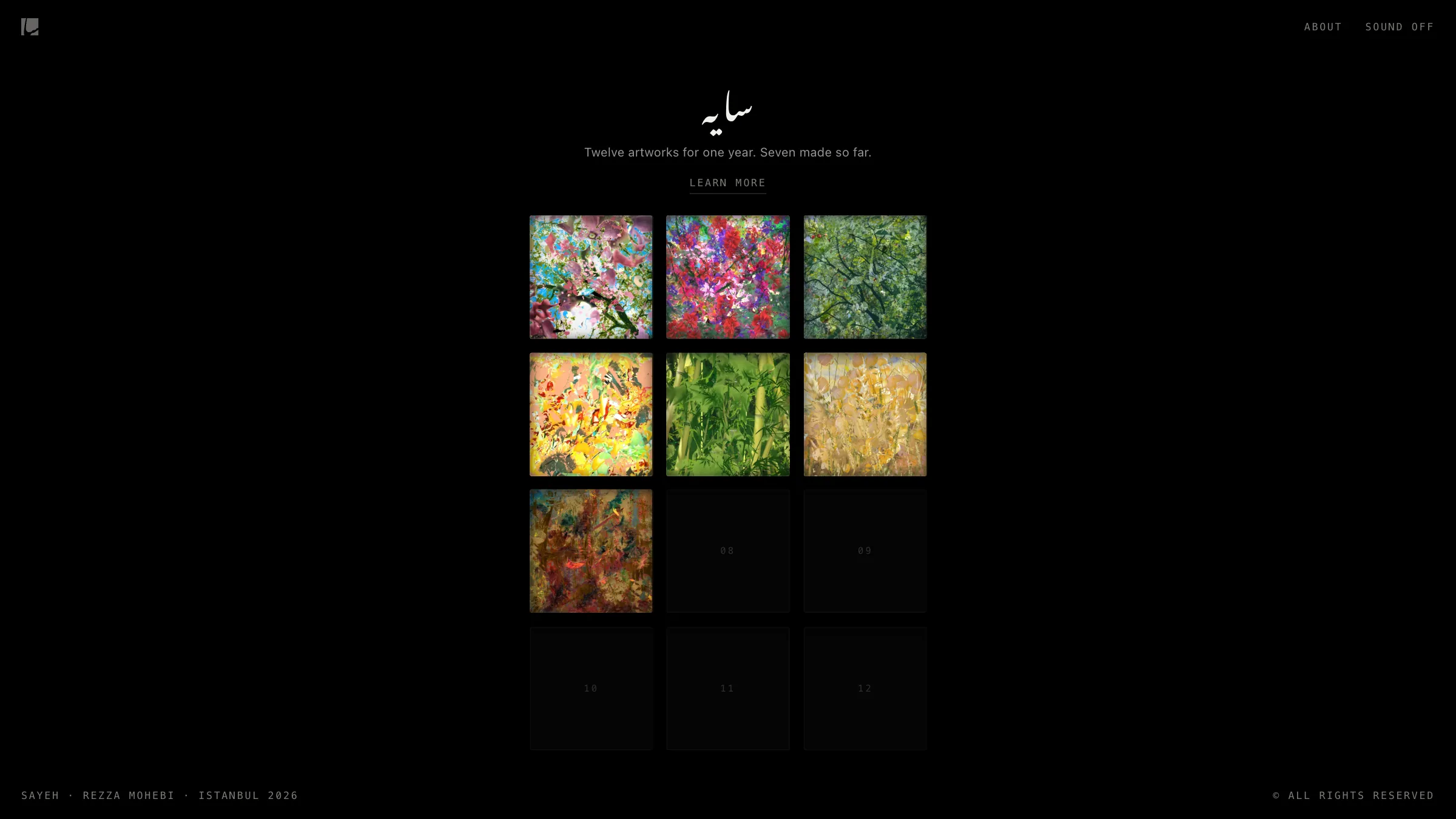
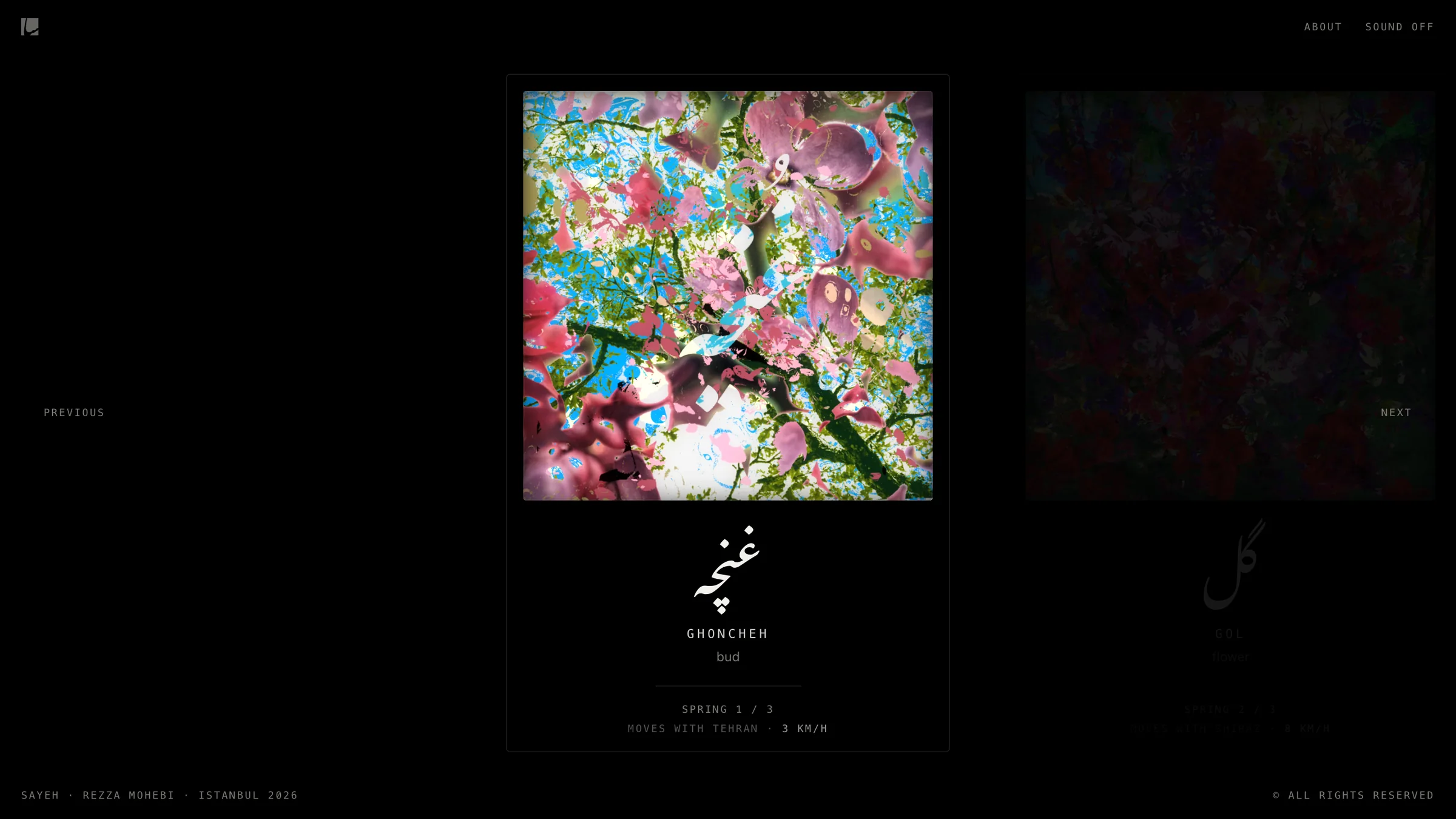
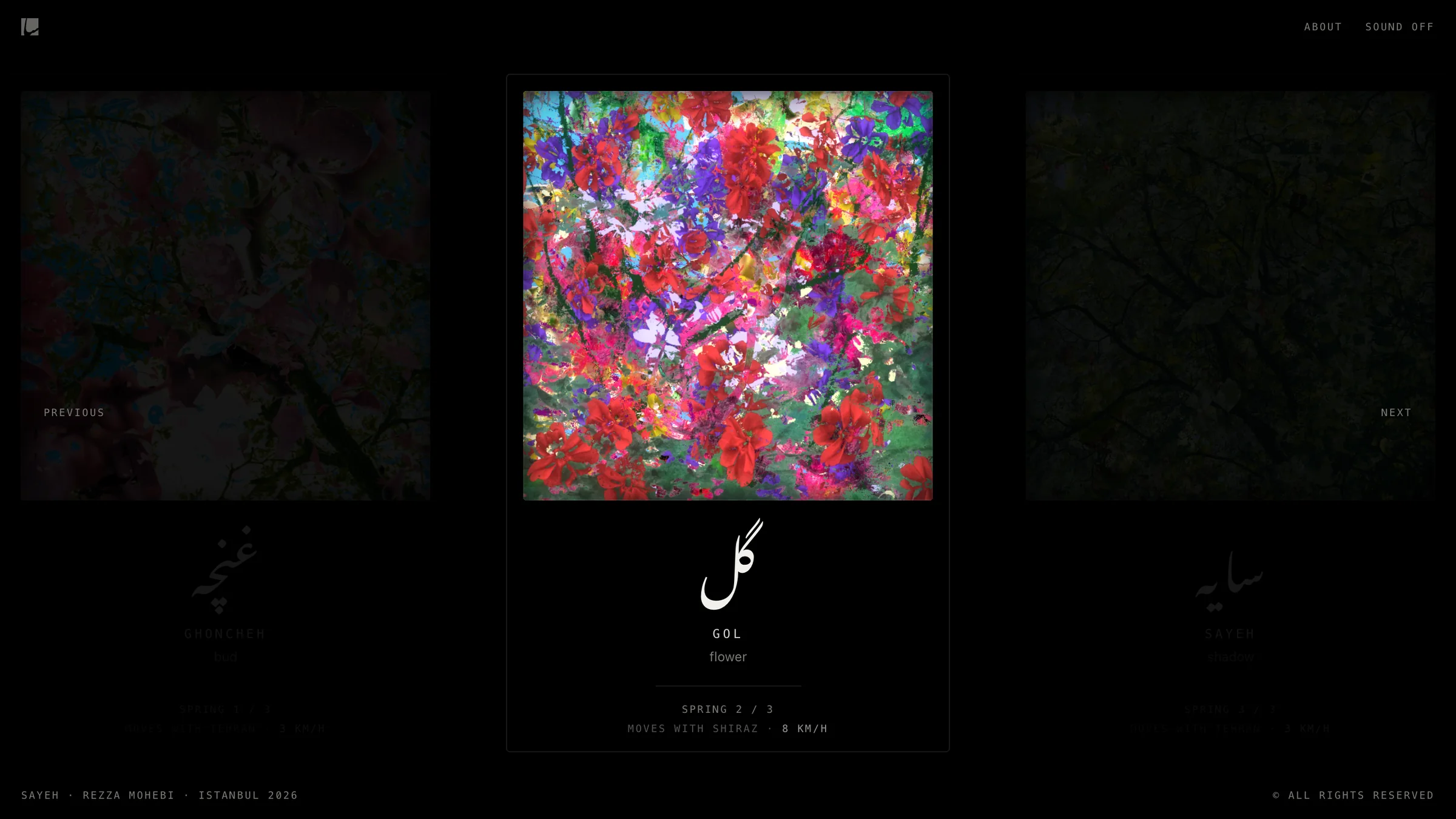
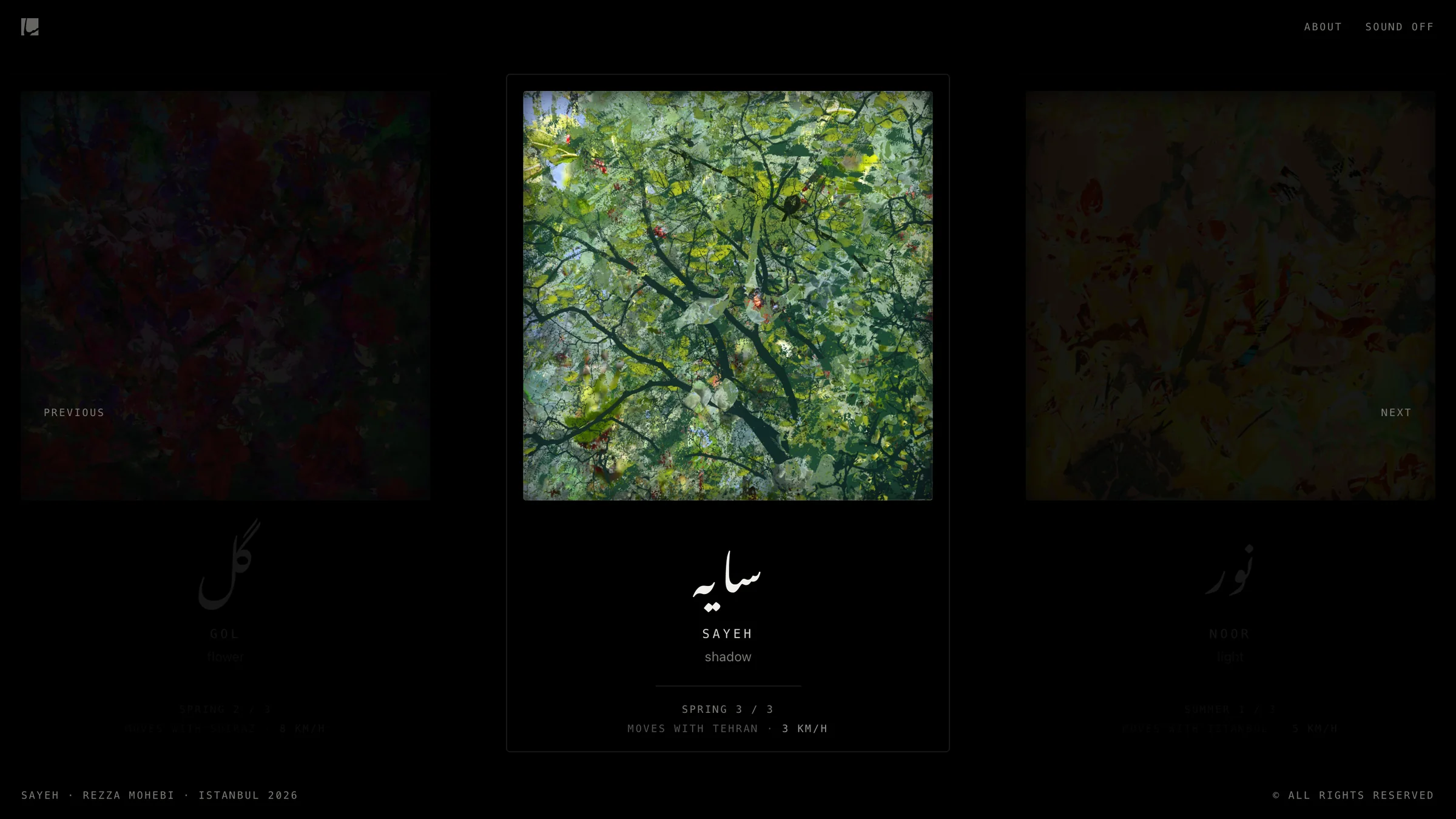
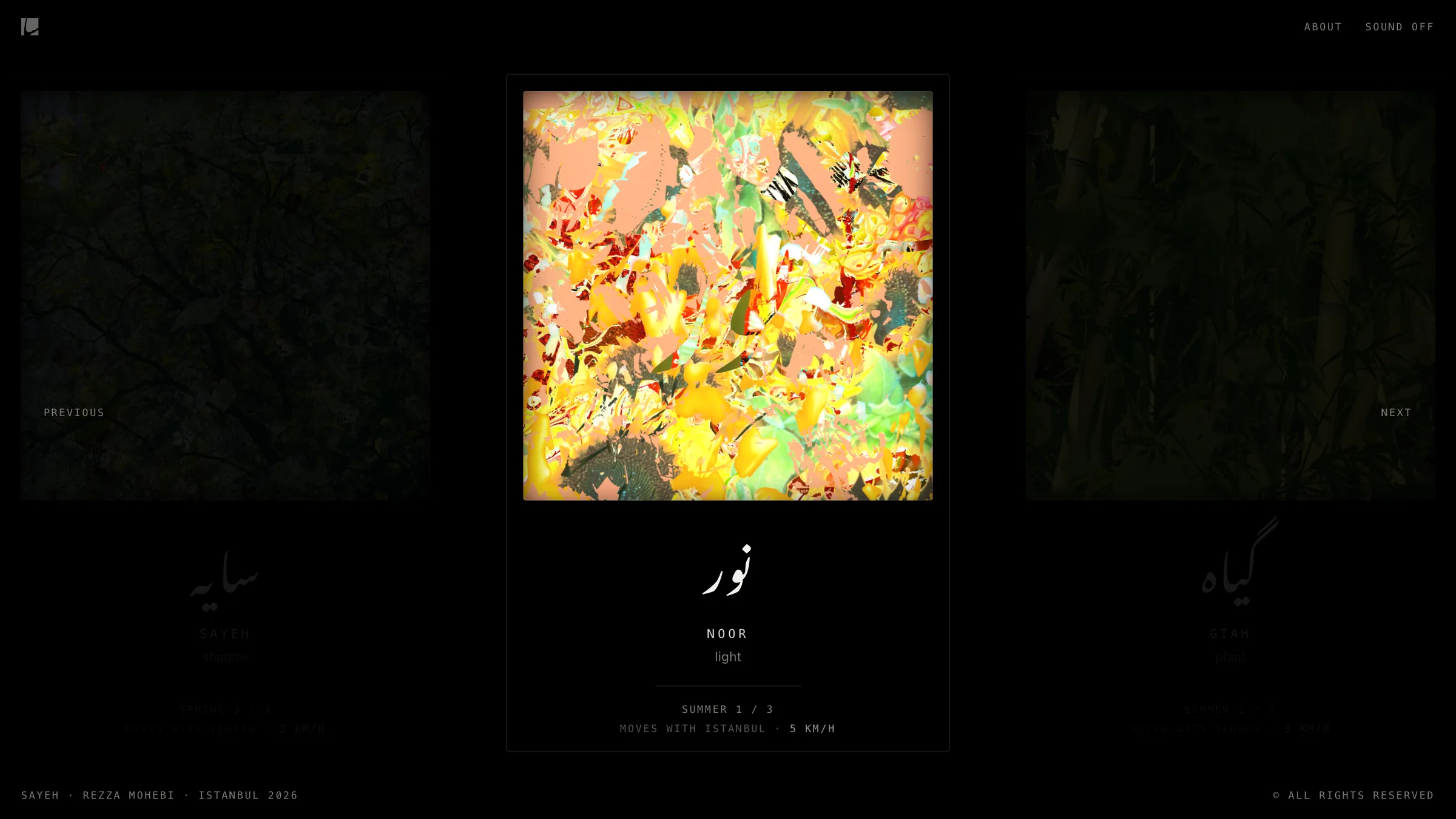
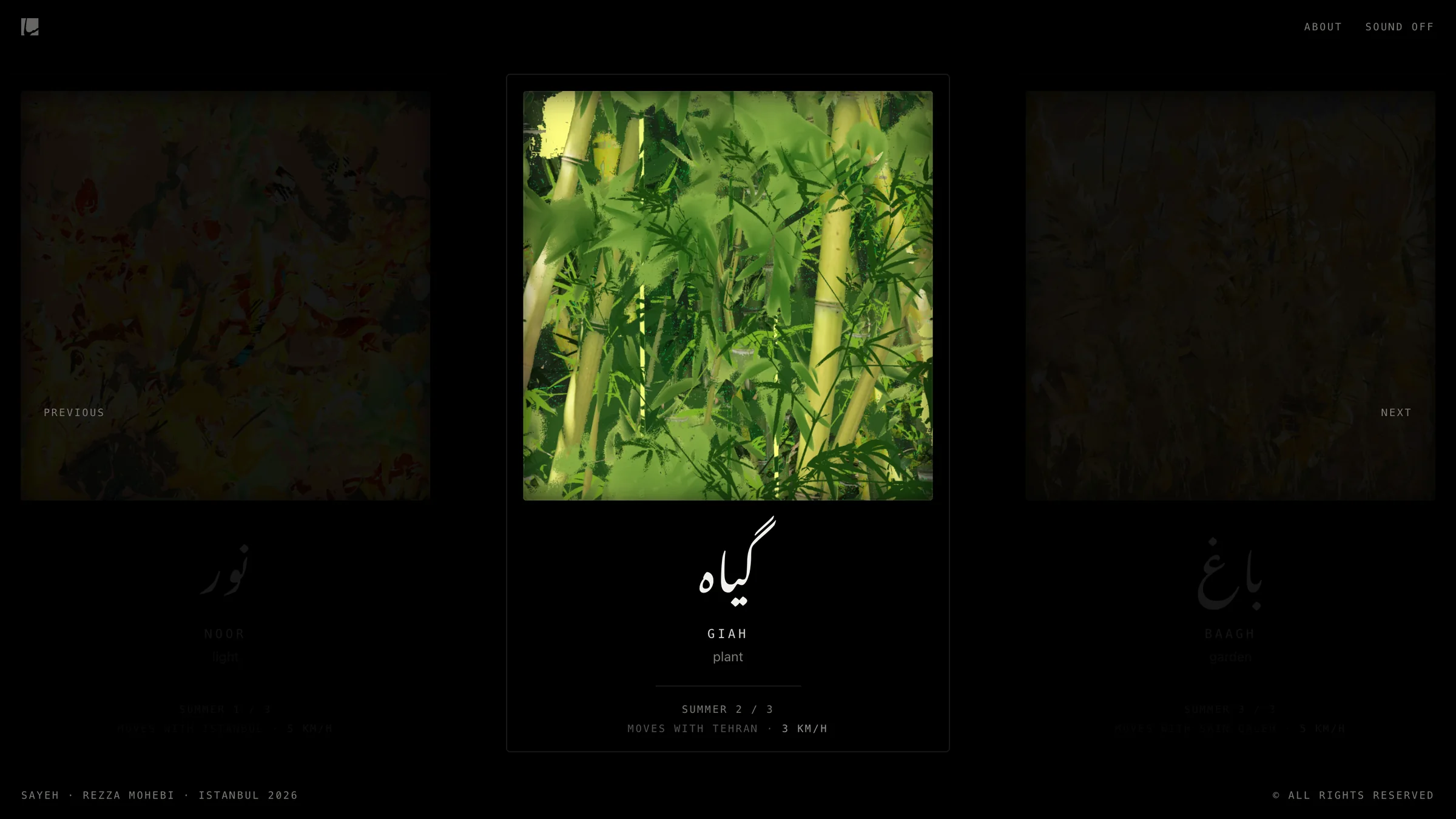
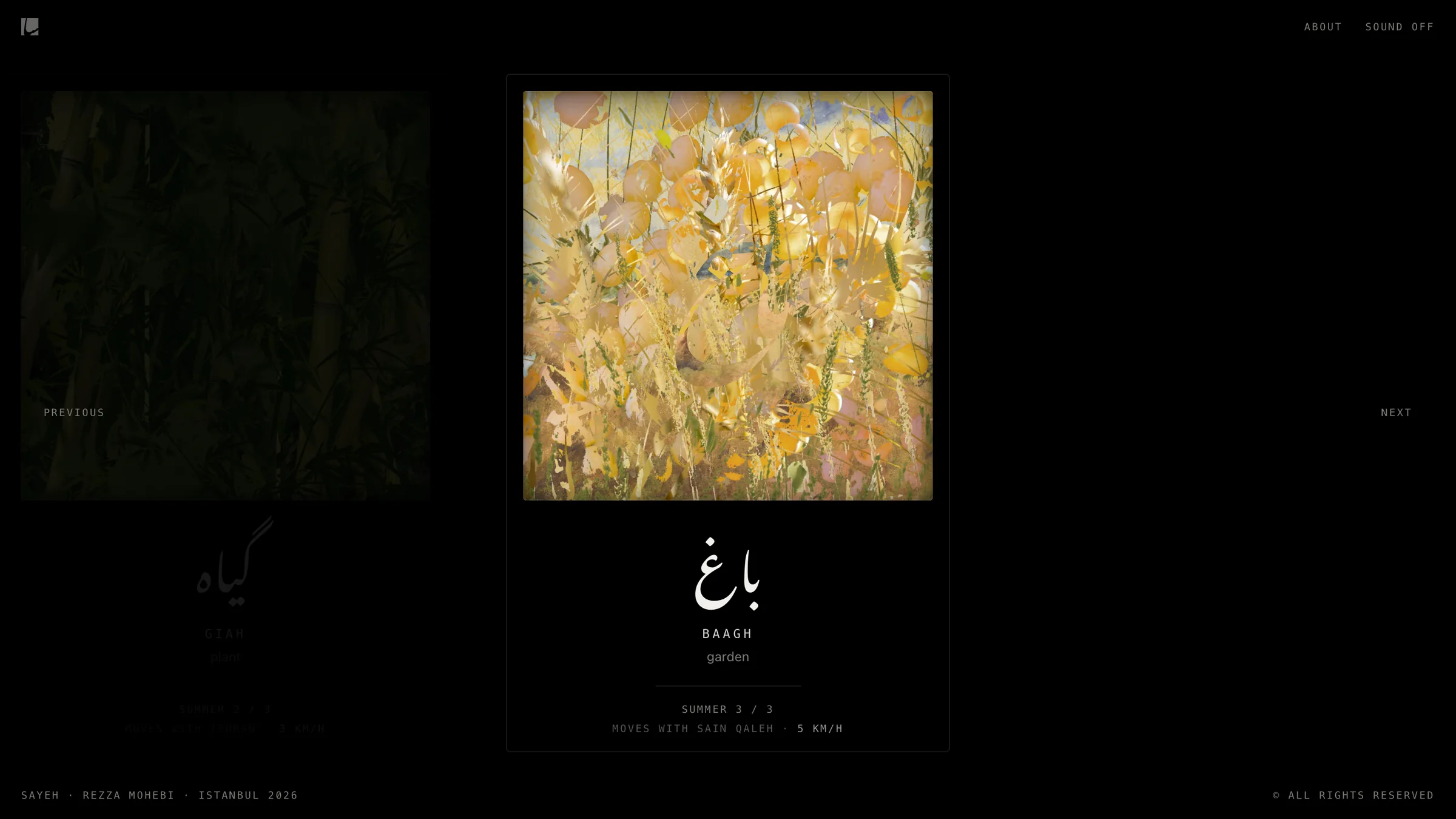
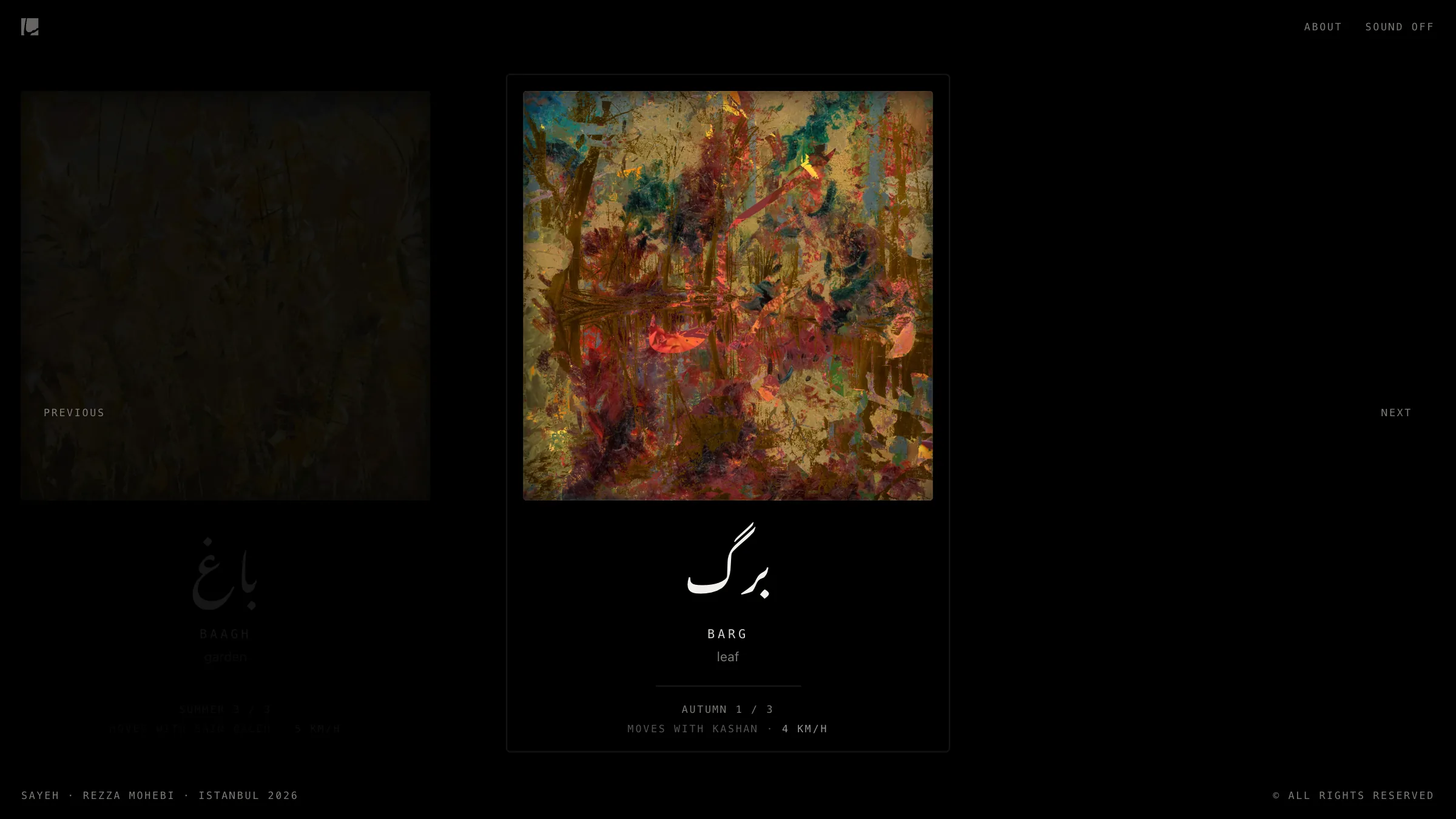
The artworks
The wall and the seven artworks made so far, one word each. On the site every one of them is built live and moving.